Saturday, December 2, 2023

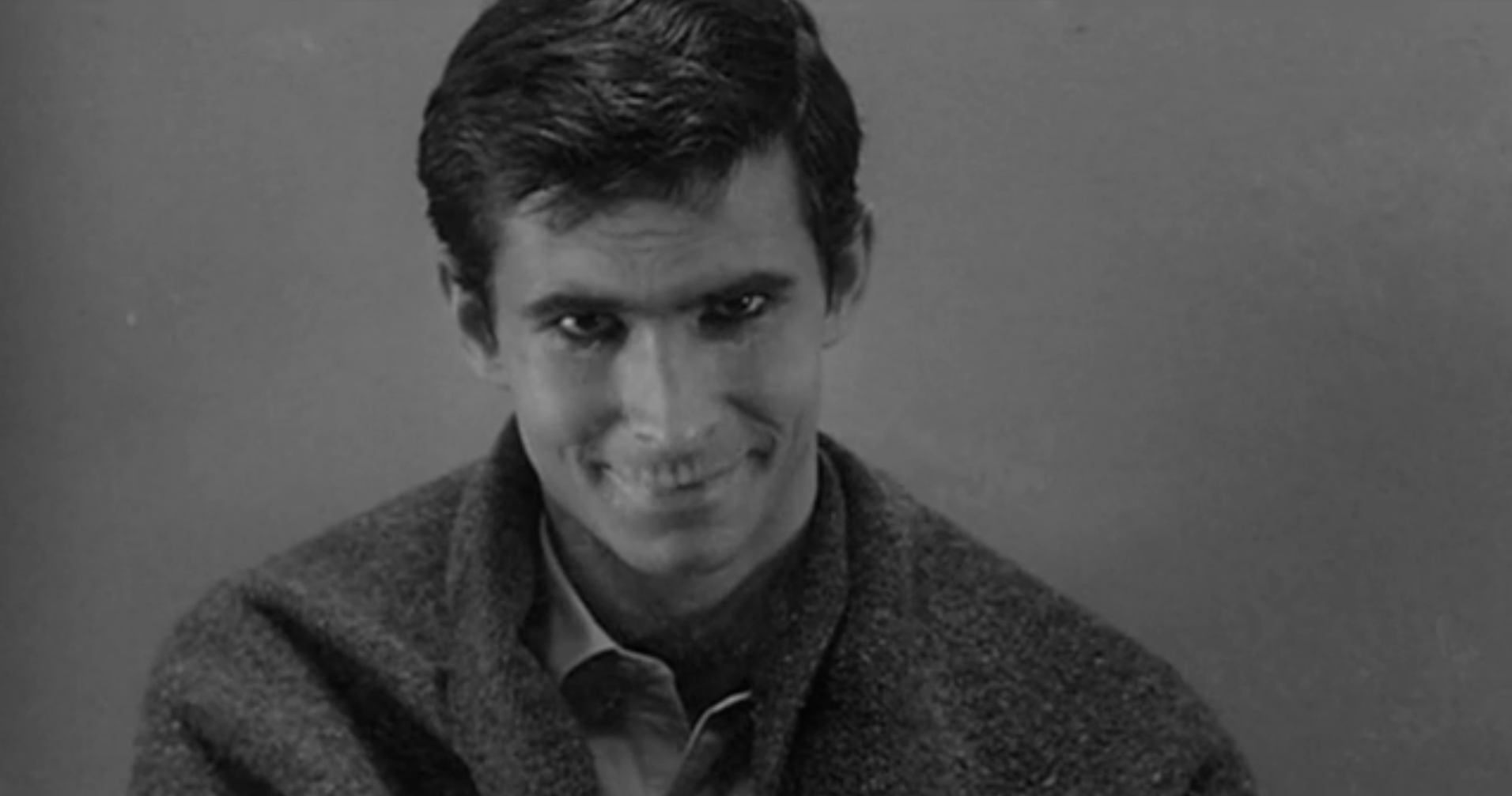
Psycho (1960)

PSYCHO
1960 • Alfred Hitchcock

Screenplay: Joseph Stefano; Based on Psycho by Robert Bloch
Cast: Janet Leigh, Anthony Perkins, Vera Miles, John Gavin, Martin Balsam, John McIntire, John McIntire, Simon Oakland, Frank Albertson, Pat Hitchcock
Cinematography: John L. Russell
Music: Bernard Herrmann
Producer: Alfred Hitchcock

Paramount Pictures

Well, a boy's best friend is his mother.


Everything you have read, seen, or heard about Psycho is probably true. Unfortunately, the "twist" ending has been parodied to death (no pun intended) and it, along with its iconic score, is part of the American pop culture landscape. However, if you have never seen Psycho, then you owe yourself a good scare. The movie is shrouded in an aura of intrigue and suspense, with a storyline that seamlessly intertwines horror, mystery, and psychological thrills. From the infamous shower scene to the eerie Bates Motel, every element of Psycho has become ingrained in the collective consciousness of audiences worldwide. References to the movie abound in various forms of media, from movies and TV shows to advertisements and Halloween costumes.

Behind Jaws and The Exorcist, Psycho is easily one of the best horror, thrillers, or horror/thrillers of all time. It's not just because the film features a serial killer (although that plays a significant role), but because the film is genuinely terrifying and shocking to the senses.

Psycho follows Marion Crane, a young secretary who embezzles money from her employer and decides to go on the run. Tired and caught in a rainstorm, she checks into the secluded Bates Motel, owned by the enigmatic Norman Bates and his overbearing mother. Marion's decision to stay at the motel sets off a chain of horrifying events, culminating in one of movie history’s most iconic scenes. The film slowly uncovers the dark secrets hidden within the Bates Motel, leading to a shocking revelation. The film explores themes of identity, madness, and the blurred lines between reality and delusion.

Psycho was adapted from the novel of the same name by Robert Bloch. Bloch's narrative provided Hitchcock with a foundation for his screenplay, allowing him to delve into the complexities of the human mind and create a story that both disturbed and fascinated audiences. Ed Gein was a notorious American murderer and grave robber, who served as an inspiration for several on-screen villains, including Psycho. It’s important to note that this is not the story of Ed Gein. Hitchcock and Bloch drew inspiration from Gein’s murders but does not retell the story. Gein's twisted psyche and the gruesome discoveries in his home fascinated the public and the media, influencing numerous works of fiction in both literature and film. Hitchcock's decision to draw inspiration from Gein's story added a layer of real-life horror to the fictional narrative, intensifying the impact of Psycho on audiences' collective psyche.

Psycho stands as one of the earliest and most influential "slasher" films in cinematic history. Released in 1960, it revolutionized the horror genre by introducing elements of suspense, psychological terror, and shocking violence. Alfred Hitchcock's meticulous direction and storytelling techniques set new standards for horror filmmaking, making Psycho a trailblazer for the countless slasher films that would follow.

One of the reasons this film is so scary is that the scares are earned by a well-crafted screenplay. Instead of using the tired conventions of modern horror films where something "jumps out" at the audience, the screenplay builds its characters, their motivations, and their actions so well that when the scare comes it is natural and organic instead of contrived. What is quite genius about Stefano's script (which was based on a novel by Robert Blotch), is that Marion has what appears to be a petty motivation at the beginning of the film. However, without entering into spoiler territory, Hitchcock completely manipulates your expectations and as Act I ends and Act II begins you are completely caught off guard as to what to expect in the film. It's at this point that the Norman Bates character becomes the main crux of the story. His motivation and character development are so fascinating that it dwarfs the rest of the plot and characters. The mystery surrounding what is truly going on at the Bates Motel is one of the most well-written in cinema history.

Central to the film's enduring impact is Bernard Herrmann's iconic score. Herrmann's music, especially the shrieking strings during the famous shower scene, became synonymous with fear. His composition elevated the film's tension, creating an atmosphere of unease and anticipation that intensified every moment, making audiences hold their breaths in terror.

Obviously, Hitchcock's value can never be understated, but he truly did create a horror milestone. Just examine the infamous shower murder scene. A scene that even people who have never seen the film can immediately call to mind when the film is mentioned. It is incredibly frightening, disturbing, and terrifying. Notice, however, there is no gore. None. You see a knife, a shadowy figure, you hear the screaming terror, and finally, some blood trickles down the drain. You never see the knife wounds or stab marks, however the rapid-fire editing, the point of view shots (from both the victim and the killer), the sound effects, and of course that unnerving score by Bernard Herrmann all combine to make one of the most violent scenes of all time.

Psycho is Hitchcock's A-list B-movie. Despite its relatively low budget and unconventional narrative, the film showcased Hitchcock's mastery of suspense, effectively blending high-quality production values with a compelling, provocative story. Its success challenged the industry's perception of what a blockbuster could be, proving that a film didn't need a massive budget to captivate audiences and become a critical and commercial triumph.

While Hitchcock certainly had his easily recognizable styles and themes, they never overshadowed the actors or the performances. Whether it was Jimmy Stewart in Vertigo or Cary Grant in North by Northwest, Hitchcock always populated his films with incredible actors. Janet Leigh and Martin Balsam both give fine supporting performances, but the true star of the film has to be Anthony Perkins. Perkins' portrayal of Norman Bates is all at once terrifying, pathetic, sweet, and off-putting.

Hitchcock's reputation and persuasive skills played a pivotal role in convincing Paramount Pictures to distribute Psycho. Initially skeptical, Paramount executives were hesitant to back a film with such a shocking storyline. However, Hitchcock's belief in the project, combined with his willingness to finance it himself and his clever marketing strategies, eventually convinced the studio to support the film. His decision to deny advance screenings, urging theaters to enforce a strict no-entry policy after the film began, further fueled curiosity and anticipation, contributing significantly to the film's eventual success.

Psycho is a horror film without monsters, ghosts, or gore, yet it will never cease to terrify audiences. It challenges expectations and its ending will drive you crazy. But that's OK... we all go a little mad sometimes.

She just goes a little mad sometimes. We all go a little mad sometimes. Haven't you?

Notable Awards & Accomplishments
  • Academy Award Nominee: Best Actress in a Supporting Role - Janet Leigh
  • American Film Institute 100 Greatest Films: #14
  • Director’s Guild of America Awards Nominee: Outstanding Directorial Achievement in Motion Pictures - Alfred Hitchcock

Friday, December 1, 2023

The Essential Films Podcast Episode #61 - Short Subjects: INGLOURIOUS BASTERDS (2009)


Taking a look at Quentin Tarantino's 2009 modern classic INGLOURIOUS BASTERDS


THE BRIDE OF FRANKENSTEIN 1935 • James Whale


THE BRIDE OF FRANKENSTEIN
1935 • James Whale

Screenplay: William Hurlbut, John L. Balderston; Based on the Premise suggested by Frankenstein 1818 novel
Producer: Carl Laemmle Jr.
Cast: Boris Karloff, Colin Clive, Valerie Hobson, Elsa Lanchester, Ernest Thesiger, E. E. Clive, Oliver Peters Heggie
Cinematography: John J. Mescall
Music: Franz Waxman
Universal Pictures

To a new world of gods and monsters!

This sequel to the 1931 film Frankenstein is considered by many to be one of the best horror films ever made. It stands as a classic in the horror genre and a testament to the ingenuity of early Hollywood filmmaking. This iconic film took the legacy of Mary Shelley's Frankenstein to new heights, introducing memorable characters and delving into themes of creation and humanity.

The movie picks up where the original left off, with the monster surviving the fire that ended the first film. The film follows the monster's journey as he tries to find his place in a world that rejects him. The insane Dr. Pretorious convinces Dr. Frankenstein to build another creature, this time a female mate as a companion to his first, tragic monster. The original Universal Frankenstein film left out many details of the book, including the section in which the Monster demands the mate, which is fully fleshed out as an entire film here. Much different than the source material, however, as there is no Dr. Pretorious in the novel who blackmails Dr. Frankenstein into creating a new monster.

Even before the original film's release, Universal Pictures considered the possibility of continuing the story in a sequel. This foresight led to significant changes in the film's original ending, allowing for Henry Frankenstein's survival and the opportunity to explore new narrative horizons. Director James Whale believed that The Bride of Frankenstein would be unable to surpass the success of its predecessor. Instead of trying to outdo the original, he decided to make it a memorable "hoot." This approach gave the film a unique charm and an enduring appeal.

The mysterious bride is credited in the film as “?” but was in fact portrayed by Elsa Lanchester. But she also played another pivotal role in the film: Mary Shelley. The film begins with a prologue featuring Mary Shelley, where she discusses the moral lesson behind her novel with Percy Bysshe Shelley and Lord Byron. This addition connects the film to its literary source and emphasizes the cautionary tale of playing God. Elsa Lanchester's portrayal of the Bride's hissing was inspired by the hissing of swans. Her dedication to the role even led to her suffering a sore throat during the filming of the hissing sequence, which director Whale shot from multiple angles. Jack Pierce's makeup work for The Bride, with input from director James Whale, resulted in an iconic and unforgettable look. The Bride's distinctive hairstyle, inspired by Nefertiti, remains a symbol of classic horror. The final reveal of the Monster's Mate at the end of the film is worth the journey after a thoroughly enjoyable film.

Colin Clive, who played Henry Frankenstein, was struggling with alcoholism during the filming of The Bride of Frankenstein. However, director Whale believed that Clive's "hysterical quality" was essential for the character, so he retained him in the role. One can argue the morality behind that choice, but it does work quite well as Clive plays Dr. Frankenstein as desperate, on the edge of a breakdown, and mentally exhausted.

Dr. Pretorius is a new character added to the story, one which does not appear in the novel. His inclusion brings a weird and wonderful campiness to the sequel. The film takes a sillier and campier tone when Pretorious appears on screen, as Ernest Thesiger chews scenery until nothing is left. One of the stranger aspects of the film is the inclusion of homunculi, miniature humans created by Dr. Pretorius. These peculiar creatures were brought to life through innovative filming techniques that involved shooting actors in full-size jars against black velvet, creating a visually striking effect. Another odd scene features Pretorius enjoying a light supper in a crypt, speaking to himself in exaggerated tones and gestures. In such a macabre setting, this may jar some viewers.

The movie's standout performance is undoubtedly Boris Karloff as the monster. Karloff delivers a remarkable performance as the creature, adding a layer of humanity to a character that is often portrayed as a mindless monster. In a departure from the novel, the film portrays the Monster's learning of English and kindness from the Blind Man as taking place in a matter of hours. Narratively, this allows the film to move along at a quicker pace, but it does very much deviate from the book where the process takes weeks. Boris Karloff strongly objected to the decision to allow his character to speak. This decision marked a significant departure from the silent, imposing figure of the Monster in the original film. That said, the monster only speaks about 40 unique words, so much of his performance still relies on the magnificent body language and facial acting of Karloff.

Aside from its outstanding performances, Bride of Frankenstein is notable for its impressive special effects. The film's laboratory scenes, elaborate set designs and intricate props, elevate the production value of the film. The film's score, composed by Franz Waxman, also adds to the movie's overall eerie atmosphere. Its stunning visuals, outstanding performances, and haunting score make it a must-see for horror fans and cinephiles alike.

The Bride of Frankenstein continues to captivate audiences with its blend of horror, humor, and social commentary. James Whale was himself a gay man, as was Ernest Thesiger. Colin Clive was also rumored to have been closeted. Many scholars have suggested that the film could be seen as a metaphor for the ostracization of gay men, adding another layer of significance to this cinematic masterpiece. It's important to note that this is not a universally accepted or confirmed reading of the film's subtext. The idea of the film serving as a metaphor for the experiences of closeted gay men seems to be an extrapolation of the knowledge that Whale, Thesigerl, Clive, and potentially others were themselves gay. The Monster is a classic outsider figure. He is misunderstood, feared, and rejected by society, much like LGBTQ+ individuals have historically been marginalized and stigmatized. The dynamic between Dr. Pretorius and Henry Frankenstein has been interpreted by some as having homoerotic undertones. Their close collaboration and the intensity of their relationship have led some viewers to speculate about a deeper subtext. The Monster's desire for a mate in the film might be seen as a representation of the universal human desire for companionship and love, even if that love is considered an “abomination” by societal standards. Some also interpret this as reflecting the yearning for acceptance and understanding that closeted gay individuals might have felt in a society that often condemned their identity. However, it's crucial to remember that these interpretations are not definitive. Whale himself never openly discussed such intentions in relation to the film.

It's also important to recognize that The Bride of Frankenstein is a complex work with multiple layers of interpretation. While it may resonate with some viewers on a metaphorical level, it should not be reduced solely to a representation of any one particular experience. Ultimately, the film's lasting legacy lies in its ability to provoke thought, spark discussion, and continue to captivate audiences with its rich and multi-faceted storytelling, regardless of the specific interpretations applied to it.

The film's enduring legacy paved the way for a series of sequels and adaptations. In classic Universal Pictures fashion, the studio followed up Bride with a series of films including Son of Frankenstein, Ghost of Frankenstein, Frankenstein Meets the Wolf Man, The House of Frankenstein, House of Dracula, and Abbott and Costello Meet Frankenstein. Bride of Frankenstein's closest remake was The Bride (1985), a retelling of the tale with musician Sting playing Dr. Frankenstein and Jennifer Beals as the titular Bride. Another remake was planned for Universal’s doomed Dark Universe series, starring Javier Bardem and Angelina Jolie as Frankenstein's monster and the reluctant bride respectively. The project was canceled when Universal pulled the plug on the Dark Universe.

There is a fictionalized behind-the-scenes retelling of Bride of Frankenstein in the 1998 film, Gods and Monsters, in which Ian McKellan plays director James Whale in the last days of his life, and also delves deep into his experiences as a gay man in Hollywood. This serves as an excellent companion piece to the film and McKellan was nominated for a Best Actor Academy Award for his performance.

We belong dead.

Notable Awards & Accomplishments

• Academy Award Nominee: Sound Recording
• National Film Registry: Class of 1998
• Included in Time Magazine’s “100 Greatest Movies of All Time”


Saturday, November 25, 2023

Frankenstein (1931)

FRANKENSTEIN
1931 • James Whale

Screenplay: Garrett Fort, Francis Edward Faragoh from the novel by Mary Shelley
Producer: Carl Laemmle Jr.
Cast: Boris Karloff, Colin Clive, Mae Clark, John Boles, Edward Van Sloan
Cinematography: Arthur Edeson, Paul Ivano

Universal Pictures

AWARDS & HONORS
American Film Institute:
100 Years 100 Movies (1997 List) - #87
100 Years 100 Movie Quotes - #49 ("It's alive! It's alive!")
100 Years 100 Thrills - #56
National Film Registry
Inducted in 1991

THE MAN WHO MADE A MONSTER!

Look! It's moving.  It' alive. It's alive! It's alive! ... In the name of God! No I know what it feels like to be God!

SPOILERS AHEAD

Dr. Henry Frankenstein is obsessed with death. He believes he can give life to dead flesh and creates a man to prove his theory, he creates a man by sewing together body parts from various corpses.  Instead of a man, he gives birth to a monster. Unfortunately, the creature's abnormal brain causes him to break free and escape his creator as the film then focuses on the monster's attempt to find its "humanity."

One of the first books and films to really start blending genres. The film itself is not a perfect adaptation of the book. In fact, it takes many liberties, with the creation of the monster's mate left for another movie altogether. Unlike a lot of early talking pictures, Whale was relatively light on dialogue, letting the monster's actions and appearance do a lot of the talking on-screen. Whale (through Shelly's work) used elements of science fiction and horror to create the monster, and his "birth" scene is still one of the most memorable in film history. Frankenstein was responsible for the imagery modern audiences associate with the Monster: Tall, Flat Top, Bolts in the neck.

This brings us to the immortal Boris Karloff. Never before or again has an actor so perfectly embodied the monster he created on-screen, save for his Universal Pictures contemporary Bela Lugosi with Dracula. Karloff's Frankenstein Monster is an achievement in makeup, costuming, and performance. It would be easy to portray the character as a mindless killing machine, as others have in other adaptations. In fact, Bela Lugosi was originally offered the part when the character was scripted as such... he turned it down.  However, Karloff manages to emote sincerity through the heavy makeup, forcing sympathy from the audience. The final fiery end (or is it?) for the creature is truly tragic.

Two key scenes to point out for viewers of this classic: First, the "creation" sequence, perhaps the most famous and iconic of horror history, and even film history. Parodied endlessly throughout the decades, it still is a beautiful example of direction, art direction, and editing. From the shots of the laboratory equipment to the lightning-filled skies, to the hand slowly lifting as it is regenerated to life... it's all perfectly executed. Colin Clive as Dr. Frankenstein is a little hammy throughout the rest of the film, but here it's completely appropriate. He screams, in an almost orgasmic delight, "It's alive. It's alive! It's alive! ... In the name of God! No, I know what it feels like to be God!" His joy at playing God is the terror here.

The second scene, less famous to mainstream audiences, but unforgettable to admirers of the film is the scene with the little girl by the lake. The monster, still learning with his damaged, abnormal brain, befriends an innocent little girl. She shows him beauty in the world, beauty with the flowers she is picking and how pretty they look floating on the water. Karloff's look of innocence here is disturbing juxtaposed with what we know comes next. The monster throws the little girl into the water (off-screen of course) so he can see her float... her death as a result triggers the townspeople to light the pitchforks in search of the monster. A beautiful and haunting scene.

The movie was a huge success and is synonymous with Universal which sequel-ized and spun-off the monster in various films: The Bride of Frankenstein (1935), Son of Frankenstein (1939), The Ghost of Frankenstein (1942), House of Frankenstein (1944) and Abbott and Costello Meet Frankenstein (1948). Not to mention all other interpretations of the character who followed in Universal's footsteps like Curse of Frankenstein (1957) and Mary Shelley's Frankenstein (1994), but the original remains the go-to classic.


I think it will thrill you. It may shock you. It might even horrify you. So if any of you feel that you do not care to subject your nerves to such a strain, now is your chance to, uh... well, we've warned you!


Thursday, November 23, 2023

THE MAN WITH THE GOLDEN GUN (1974)

THE MAN WITH THE GOLDEN GUN

Guy Hamilton • 1974


Screenplay: Richard Maibaum, Tom Mankiewicz; Based on The Man with the Golden Gun by Ian Fleming

Producers: Harry Saltzman, Albert R. Broccoli

Cast: Roger Moore, Christopher Lee, Britt Ekland, Maud Adams, Hervé Villechaize

Cinematography: Ted Moore, Oswald Morris

Music: John Barry

United Artists


- A duel between titans… my golden gun against your Walther PPK.

- One bullet against my six?

- I only need one, Mr. Bond. 


James Bond investigates a notorious assassin, Francisco Scaramanga… or, the Man with the Golden Gun. I’m assuming most Gen X and Millenial readers have played the legendary Goldeneye for the Nintendo 64, one of the best video games of all time. And what makes it so damn fun is the player vs player mode where you can run around military bases and match wits against your friends. One of the modes in the game is “Golden Gun.” In this mode, you have to find the Golden Gun and when you shoot your opponent, one shot is all it takes and you win.


Well, they got that concept from this movie. The golden gun in question belongs to Francisco Scaramanga, an international hitman with an island full of gadgets, half-naked women, and a little person. Scaramanga uses said golden gun to kill his targets, and he NEVER misses. One shot is all it takes. So, this makes him already one of the coolest James Bond villains ever, right? Well, it gets better, because the Man with the Golden Gun is played by none other than Christopher Lee.


It’s not a perfect Bond movie, by any stretch of the imagination. The plot is nonsensical, as a lot of Roger Moore Bonds were. Expect lots of goofy campy fun. But really you’re watching this movie for Christopher Lee playing the heavy. Can’t get much better than that. The final face-off between Bond and Scaramanga is one of the best in the history of Bond films.


Short Subjects: INGLOURIOUS BASTERDS (2009) - Video Essay

Wednesday, November 22, 2023

LIVE AND LET DIE (1973)


LIVE AND LET DIE
1973 • Guy Hamilton

Screenplay: Tom Mankiewicz; Based on Live and Let Die by Ian Fleming

Producer: Harry Saltzman, Albert R. Broccoli

Cast: Roger Moore, Yaphet Kotto, Jane Seymour, Clifton James, Geoffrey Holder

Cinematography: Ted Moore

Music: George Martin, Theme song “Live and Let Die” by Paul McCartney

United Artists


A man comes. He travels quickly. He has purpose. He comes over water. He travels with others. He will oppose. He brings violence and destruction.


James Bond is back, and this time he's facing a villain like no other – a powerful heroin drug lord with a sinister worldwide network, bolstered by psychics and voodoo mysticism. But don't expect a dark and brooding Bond this time around. In Live and Let Die we are introduced to a whole new flavor of 007 – one that embraces campiness with open arms.


Throughout the years, we've seen various actors breathe life into the iconic character, each bringing their own unique touch to the role. Roger Moore's interpretation of Bond is no exception. With a wry and dark sense of humor, he adds a distinctive charm to the character. While all the Moore-era Bond films exhibit an endearing level of silliness and campiness, Live and Let Die serves as the introduction to this lighter take on the beloved spy.


In an era replete with Blaxploitation films like Shaft and Superfly, the 1970s gave birth to a Bond/Blaxploitation crossover. The result is wacky and, at times, a hilarious ride. The film has its fair share of quirks, with the word "Honky" playfully thrown around and a voodoo witch doctor adding a touch of mysticism to the plot. Watching James Bond dash through the vibrant streets of Harlem only adds to the film's charm.


Live and Let Die marks the beginning of the Moore era, embracing a lighter and more whimsical approach to the character. Some might argue it veers away from the traditional Bond formula, but at its core, it's still unmistakably James Bond. The movie delivers thrilling car chases, jaw-dropping explosions, an array of alluring women, and, of course, a healthy dose of bad guys meeting their timely demise.


So, if you're in the mood for some pure, unapologetic escapism, Live and Let Die is the perfect choice. It's a Bond film that revels in its campy goofiness, and you'll find yourself thoroughly entertained from start to finish. After all, who doesn't want to witness the world's most famous spy tackle voodoo, psychics, and a powerful drug lord with a grin on their face? In the end, this movie delivers precisely what you'd expect from a Bond film – action, intrigue, and a whole lot of fun. And there ain't nothing wrong with that.


Plus, how awesome is the Paul McCartney song?


- There seems to be some mistake. My name is...

- Names is for tombstones, baby! Y'all take this honky out and waste him! Now!


Notable Awards & Accomplishments

• Academy Award Nominee: Best Song - “Live and Let Die” by Paul McCartney & Linda McCartney

• Grammy Nominee: Best Score for a Motion Picture

• 7th Highest Grossing Movie of 1973, $161.8 Million worldwide ($1.1 Billion adjusted for inflation)


Thursday, November 2, 2023

LICENCE TO KILL (1989)

LICENCE TO KILL

1989 • John Glen


Screenplay: Michael G. Wilson, Richard Maibaum; Based on James Bond characters by Ian Fleming

Cast: Timothy Dalton, Carey Lowell, Robert Davi, Talisa Soto, Anthony Zerbe, Everett McGill, Frank McRae, Desmond Llewelyn, Robert Brown, Caroline Bliss, Benicio del Toro, David Hedison, Wayne Newton

Cinematography: Alec Mills

Music: Michael Kamen


MGM/UA


This private vendetta of yours could easily compromise Her Majesty’s government. You have an assignment, and I expect you to carry it out objectively and professionally!


When CIA operative Felix Leiter is left for dead by vicious drug kingpin, Sanchez, James Bond makes it his personal vendetta to take him down… going so far as becoming a rogue agent.


In the illustrious history of James Bond films, one entry has often been overlooked and unfairly maligned - Timothy Dalton's portrayal in the 1989 film Licence to Kill. Despite being a stellar and gritty Bond, Dalton’s take on the iconic character often falls under the shadow of his predecessors. Dalton, however, brought a raw intensity to Bond that was remarkably close to Daniel Craig’s later interpretation. His Bond, true to Ian Fleming’s original vision, was ruthless and embittered, making him a refreshing departure from the suave, debonair Bonds of the past.  License to Kill doesn’t portray Bond as a guy who needs gadgets, but rather as what he’s supposed to be: a highly-skilled, cunning, secret agent. There are one or two cute little Q-Gadgets, but for the most part, the movie Bond has to rely on his training and skills.  


Despite Dalton's phenomenal performance, Licence to Kill faced a tough battle at the box office. It became the worst-performing Bond film in terms of grosses, leaving many to wonder why. Perhaps it was because the movie deviated significantly from the traditional Bond formula. While it retained some quintessential elements such as the presence of Q, it ventured into uncharted territories with its extreme violence. This film showcased a level of brutality not seen before in the Bond franchise. From a man being maimed by a tiger shark to another being trapped in a decompression chamber resulting in a ghastly explosion, the movie pushed the boundaries of what Bond fans were accustomed to.


What truly set Licence to Kill apart was its more well-rounded “Bond Girls”. The Bond series, until then, had often been criticized for its one-dimensional female roles. This departure from the norm was refreshing and added depth.


Furthermore, this film features something that is lost in today’s cinema:  STUNTS. In fact, some of the most incredible stunts ever seen in the Bond universe to that point. The film pushed the envelope in terms of action, leaving audiences both shocked and exhilarated. My lord, in a day and age where EVERYTHING is CG’d to death, this film relies on stuntmen doing dangerous stunts, on REAL buildings and vehicles exploding.  What a freaking concept!  It looks so much better and cooler when you know that the 18-wheeler at the end of the film was actually blown up by a stunt coordinator and not a laptop.  


Additionally, the villain of the film, Franz Sanchez, is criminally underrated.  While Goldfinger, Dr. No, Trevelyan, and Blofeld will go down as the more famous Bond villains, it’s a shame that Sanchez gets ignored. Again, he’s a more realistic villain. He’s not out to conquer the world or blow up a country, he’s a drug lord out to make money.  Pure and simple.


In retrospect, Licence to Kill might not have been a commercial success, but it undeniably left its mark on the Bond legacy. Dalton’s fierce portrayal, the intense violence, the great Bond girls, and the jaw-dropping stunts all contributed to making it a unique and memorable installment in the franchise. It might not have resonated with everyone at the time, but its daring approach and willingness to break conventions have earned it a special place among Bond enthusiasts, showcasing that there’s more to 007 than just martinis and charm. Anyway, you can hate on Dalton if you want, but Licence to Kill is a fun, ass-kicking movie with lots of explosions and sweet stunts.  And really, what more can you ask for?


I'll do anything for a woman with a knife.


Notable Accomplishments

  • Edgar Allan Poe Award Nominee: Best Motion Picture

Wednesday, November 1, 2023

Inglorious Basterds (2009)

INGLOURIOUS BASTERDS

2009 • Quentin Tarantino


Screenwriter: Quentin Tarantino

Producer: Lawrence Bender

Cast: Brad Pitt, Mélanie Laurent, Christoph Waltz, Eli Roth, Michael Fassbender, Diane Kruger, Daniel Brühl, Til Schweiger, BJ Novak, August Diehl, Julie Dreyfus, Sylvester Groth, Jacky Ido, Denis Menochet, Mike Myers, Rod Taylor, Martin Wuttke

Cinematography: Robert Richardson


Weinstein Company

Universal Pictures


Each and every man under my command owes me one hundred Nazi scalps. And I want my scalps. And all y'all will git me one hundred Nazi scalps, taken from the heads of one hundred dead Nazis. Or you will die tryin'. 


Once upon a time in Nazi-occupied France...


Inglorious Basterds is a War World II film... well, let me rephrase. It's a film that takes place during World War II. It follows three different storylines that all converge into one hell of a climax. The first storyline follows Lt. Aldo Raine (Brad Pitt) and his band of Jewish-American soldiers (known as the titular Basterds) as they go deep behind enemy lines and kill, maim, and torture Nazis. The film also follows Col. Hans Landa, or "the Jew Hunter," as he tracks down enemies of the state, whether they be Jews in hiding or the Basterds themselves. And the final storyline belongs to Shosanna Dreyfus, who escaped the massacre of her family at the hands of Landa and now lives in Paris, hiding in plain sight.


(WARNING: SPOILERS AHEAD)


Everyone talks about Reservoir Dogs, Kill Bill and of course, Pulp Fiction, but even "minor Tarantino" (as some put it) like Jackie Brown and Death Proof are still far better films than they are given credit for. Tarantino adds to his already legendary film canon with Inglourious Basterds. This film just plain works on every single level.


First and foremost, let's start with the story. Tarantino divides this film into five separate chapters. Each one of these chapters furthers the overall plot of the film, while at the same time being so self-contained that they almost feel like their own short film. In fact, long periods of time take place in between chapters that are never explained, but it doesn't matter, Tarantino trusts the audience enough to piece it together. Three scenes, in particular, stand out: the opening scene at the dairy farm, the restaurant scene between Landa and Shosanna, and the basement tavern scene. These scenes are so well written and so wrought with tension that they will be studied and analyzed for years in film classes and textbooks.


One of the things QT always does well in his scripts is character development. Well, in this film he had the additional task of setting up a lot of really heavy exposition. Tarantino in most of his films does something that most screenwriters should take note of. He builds characters and delivers exposition without you even noticing he's doing it. He does it by burying those elements deep within a conversation between two characters that would otherwise seem meaningless... or he distracts you from the exposition by showing you something else. It's sleight-of-hand screenwriting. The best example of this is the "Royale with Cheese" discussion in Pulp. In Basterds he does this expertly in a few scenes, the aforementioned dairy farm conversation, the basement tavern scene, and the interrogation of Bridget Von Hammersmark at the veterinarian's office.


Speaking of character development, I don't believe there has ever been a more well-written character than Hans Landa. Hans Landa is absolutely an evil, vile, and deplorable human being. But what is most disturbing about the character is that the audience is put in a position to respect the man. He is a twisted Sherlock Holmes (in fact he even busts out a comically large Holmes-esque pipe in an early scene) who is damn good at his job. On top of that, the character has a very pleasant and charming demeanor, which makes him all the more unsettling.


And of course, you can't talk about Landa without talking about the magnificent performance of Christoph Waltz. Sometimes Academy Awards are handed out because someone is the sentimental favorite, or because of politics. Waltz deserves every square centimeter of that little gold statue as he absolutely gave the best performance of the year (supporting or otherwise.) Landa deserves a spot on any list of greatest Movie Villains.


The film also gives two other very memorable characters. The first is Lt. Aldo Raine, played by a scenery-chewing Brad Pitt. What's great about Aldo is he is at once comical and menacing. Yes, he is kind of a buffoon, especially when trying to speak Italian, but he's on a mission and he won't stop until he's completed it. Raine could have a whole movie dedicated to himself. Tarantino touches on some of his background throughout the film: he's a descendant of mountain men and Indians? He sells moonshine? He fought his way through Sicily? And what is with that scar? These questions are never really expanded upon, which gives the character a great level of mystery and depth.


The other great character is Shosanna Dreyfus, who has now become my favorite female character of all time. After surviving the slaughter of her family, Shosanna, a Jew in hiding, goes to France, owns an art house cinema, is in a relationship with a black man (in Nazi-occupied France, no less) AND develops a plot to kill Hitler. I LOVE this woman.


Speaking of Hitler, I appreciate the fact that he is NOT the villain of this film. Or, better put, not the main antagonist of the film. The chief antagonist is Landa, and in fact, Hitler is made to look comical, weak and ridiculous. If it wasn't for his real-life atrocities, the way he is presented in the film, he really poses no threat to the heroes. This brings me to the ending of the film. As you may know (and if you don't, I warned you there would be spoilers) Hitler is killed during Operation: Kino. The Basterds get him. Obviously, this is NOT how he actually met his demise. The film realizes it's a revenge fantasy... and the payoff to that HAS to end in Hitler's death, or it wouldn't work.


I have heard some complaints that the movie is barely in English, which is a ridiculous complaint. What I love about the film is that the Americans and the English speak English, the French French and the Germans German. Especially when language is a key part of the story as it depends on certain characters being able to go undercover. It's a stupid criticism.


The cinematography is also worth noting. Robert Richardson, the DP of this film, was brought on board after doing a great job on the Kill Bill films. Basterds takes it a notch further. For the first time you get to see Tarantino do a large-scale picture and the cinematography is so beautiful. It looks EPIC.


The way Tarantino uses music in his films is always fun to listen to. Most of his movies have great soundtracks, and Basterds is no exception. He knows exactly which tracks to use to really highlight the mood of the scene of the film. What's particularly amusing about this score is that it's anachronistic, relying heavily on Western film music motifs.


The last point I want to make is about the obvious theme that pervades this film. The theme of the film is film itself. QT has a famous quote: "I didn't go to film school, I went to films." Tarantino has had a long-running love affair with cinema itself. All of his movies contain subtle and blatant references to the films he loves. Make no mistake that at the end of the day, Inglorious Basterds is Tarantino's love letter to the movies. From his "shout out" to movies like The Searchers and Sergeant York or naming the movie itself after a cult b-movie from the 70s. The power of cinema as a tool is exploited by the Nazis in this film with their propaganda movie, "Nation's Pride." Two major characters have film backgrounds: Shosanna owns an art house cinema and Lt. Hicox's (close resemblance to Hitchcock, no?) pre-war occupation was that of a film critic. On top of all that is the obvious message Tarantino is sending about the "Power of Film." The mission to blow up a mess ton of Nazis in a movie theatre is named "Operation: Kino," which is fantastic. But on top of all that, what is the instrument of destruction used to kill the Nazis? Reels and reels of highly flammable nitrate film. If that doesn't scream "power of film," I don't know what does.


In the final image of this film Aldo Raine, after having branded Hans Landa with a swastika, looks down into the camera and says:


You know somethin', Donowitz? I think this might just be my masterpiece.


Notable Awards & Accomplishments:

  • Academy Awards Winner: Best Actor in a Supporting Role - Christoph Waltz
  • Nominated for 8 Academy Awards including Best Picture, Best Director, Best Original Screenplay and Best Cinematography
  • Cannes Film Festival Golden Palm nominee