Tuesday, November 14, 2023
Tuesday, November 7, 2023
Thursday, November 2, 2023
LICENCE TO KILL (1989)

LICENCE TO KILL
1989 • John Glen
Screenplay: Michael G. Wilson, Richard Maibaum; Based on James Bond characters by Ian Fleming
Cast: Timothy Dalton, Carey Lowell, Robert Davi, Talisa Soto, Anthony Zerbe, Everett McGill, Frank McRae, Desmond Llewelyn, Robert Brown, Caroline Bliss, Benicio del Toro, David Hedison, Wayne Newton
Cinematography: Alec Mills
Music: Michael Kamen
MGM/UA
This private vendetta of yours could easily compromise Her Majesty’s government. You have an assignment, and I expect you to carry it out objectively and professionally!
When CIA operative Felix Leiter is left for dead by vicious drug kingpin, Sanchez, James Bond makes it his personal vendetta to take him down… going so far as becoming a rogue agent.
In the illustrious history of James Bond films, one entry has often been overlooked and unfairly maligned - Timothy Dalton's portrayal in the 1989 film Licence to Kill. Despite being a stellar and gritty Bond, Dalton’s take on the iconic character often falls under the shadow of his predecessors. Dalton, however, brought a raw intensity to Bond that was remarkably close to Daniel Craig’s later interpretation. His Bond, true to Ian Fleming’s original vision, was ruthless and embittered, making him a refreshing departure from the suave, debonair Bonds of the past. License to Kill doesn’t portray Bond as a guy who needs gadgets, but rather as what he’s supposed to be: a highly-skilled, cunning, secret agent. There are one or two cute little Q-Gadgets, but for the most part, the movie Bond has to rely on his training and skills.
Despite Dalton's phenomenal performance, Licence to Kill faced a tough battle at the box office. It became the worst-performing Bond film in terms of grosses, leaving many to wonder why. Perhaps it was because the movie deviated significantly from the traditional Bond formula. While it retained some quintessential elements such as the presence of Q, it ventured into uncharted territories with its extreme violence. This film showcased a level of brutality not seen before in the Bond franchise. From a man being maimed by a tiger shark to another being trapped in a decompression chamber resulting in a ghastly explosion, the movie pushed the boundaries of what Bond fans were accustomed to.
What truly set Licence to Kill apart was its more well-rounded “Bond Girls”. The Bond series, until then, had often been criticized for its one-dimensional female roles. This departure from the norm was refreshing and added depth.
Furthermore, this film features something that is lost in today’s cinema: STUNTS. In fact, some of the most incredible stunts ever seen in the Bond universe to that point. The film pushed the envelope in terms of action, leaving audiences both shocked and exhilarated. My lord, in a day and age where EVERYTHING is CG’d to death, this film relies on stuntmen doing dangerous stunts, on REAL buildings and vehicles exploding. What a freaking concept! It looks so much better and cooler when you know that the 18-wheeler at the end of the film was actually blown up by a stunt coordinator and not a laptop.
Additionally, the villain of the film, Franz Sanchez, is criminally underrated. While Goldfinger, Dr. No, Trevelyan, and Blofeld will go down as the more famous Bond villains, it’s a shame that Sanchez gets ignored. Again, he’s a more realistic villain. He’s not out to conquer the world or blow up a country, he’s a drug lord out to make money. Pure and simple.
In retrospect, Licence to Kill might not have been a commercial success, but it undeniably left its mark on the Bond legacy. Dalton’s fierce portrayal, the intense violence, the great Bond girls, and the jaw-dropping stunts all contributed to making it a unique and memorable installment in the franchise. It might not have resonated with everyone at the time, but its daring approach and willingness to break conventions have earned it a special place among Bond enthusiasts, showcasing that there’s more to 007 than just martinis and charm. Anyway, you can hate on Dalton if you want, but Licence to Kill is a fun, ass-kicking movie with lots of explosions and sweet stunts. And really, what more can you ask for?
I'll do anything for a woman with a knife.
Notable Accomplishments
- Edgar Allan Poe Award Nominee: Best Motion Picture
Wednesday, November 1, 2023
Inglorious Basterds (2009)

INGLOURIOUS BASTERDS
2009 • Quentin Tarantino
Screenwriter: Quentin Tarantino
Producer: Lawrence Bender
Cast: Brad Pitt, Mélanie Laurent, Christoph Waltz, Eli Roth, Michael Fassbender, Diane Kruger, Daniel Brühl, Til Schweiger, BJ Novak, August Diehl, Julie Dreyfus, Sylvester Groth, Jacky Ido, Denis Menochet, Mike Myers, Rod Taylor, Martin Wuttke
Cinematography: Robert Richardson
Weinstein Company
Universal Pictures
Each and every man under my command owes me one hundred Nazi scalps. And I want my scalps. And all y'all will git me one hundred Nazi scalps, taken from the heads of one hundred dead Nazis. Or you will die tryin'.
Once upon a time in Nazi-occupied France...
Inglorious Basterds is a War World II film... well, let me rephrase. It's a film that takes place during World War II. It follows three different storylines that all converge into one hell of a climax. The first storyline follows Lt. Aldo Raine (Brad Pitt) and his band of Jewish-American soldiers (known as the titular Basterds) as they go deep behind enemy lines and kill, maim, and torture Nazis. The film also follows Col. Hans Landa, or "the Jew Hunter," as he tracks down enemies of the state, whether they be Jews in hiding or the Basterds themselves. And the final storyline belongs to Shosanna Dreyfus, who escaped the massacre of her family at the hands of Landa and now lives in Paris, hiding in plain sight.
(WARNING: SPOILERS AHEAD)
Everyone talks about Reservoir Dogs, Kill Bill and of course, Pulp Fiction, but even "minor Tarantino" (as some put it) like Jackie Brown and Death Proof are still far better films than they are given credit for. Tarantino adds to his already legendary film canon with Inglourious Basterds. This film just plain works on every single level.
First and foremost, let's start with the story. Tarantino divides this film into five separate chapters. Each one of these chapters furthers the overall plot of the film, while at the same time being so self-contained that they almost feel like their own short film. In fact, long periods of time take place in between chapters that are never explained, but it doesn't matter, Tarantino trusts the audience enough to piece it together. Three scenes, in particular, stand out: the opening scene at the dairy farm, the restaurant scene between Landa and Shosanna, and the basement tavern scene. These scenes are so well written and so wrought with tension that they will be studied and analyzed for years in film classes and textbooks.
One of the things QT always does well in his scripts is character development. Well, in this film he had the additional task of setting up a lot of really heavy exposition. Tarantino in most of his films does something that most screenwriters should take note of. He builds characters and delivers exposition without you even noticing he's doing it. He does it by burying those elements deep within a conversation between two characters that would otherwise seem meaningless... or he distracts you from the exposition by showing you something else. It's sleight-of-hand screenwriting. The best example of this is the "Royale with Cheese" discussion in Pulp. In Basterds he does this expertly in a few scenes, the aforementioned dairy farm conversation, the basement tavern scene, and the interrogation of Bridget Von Hammersmark at the veterinarian's office.
Speaking of character development, I don't believe there has ever been a more well-written character than Hans Landa. Hans Landa is absolutely an evil, vile, and deplorable human being. But what is most disturbing about the character is that the audience is put in a position to respect the man. He is a twisted Sherlock Holmes (in fact he even busts out a comically large Holmes-esque pipe in an early scene) who is damn good at his job. On top of that, the character has a very pleasant and charming demeanor, which makes him all the more unsettling.
And of course, you can't talk about Landa without talking about the magnificent performance of Christoph Waltz. Sometimes Academy Awards are handed out because someone is the sentimental favorite, or because of politics. Waltz deserves every square centimeter of that little gold statue as he absolutely gave the best performance of the year (supporting or otherwise.) Landa deserves a spot on any list of greatest Movie Villains.
The film also gives two other very memorable characters. The first is Lt. Aldo Raine, played by a scenery-chewing Brad Pitt. What's great about Aldo is he is at once comical and menacing. Yes, he is kind of a buffoon, especially when trying to speak Italian, but he's on a mission and he won't stop until he's completed it. Raine could have a whole movie dedicated to himself. Tarantino touches on some of his background throughout the film: he's a descendant of mountain men and Indians? He sells moonshine? He fought his way through Sicily? And what is with that scar? These questions are never really expanded upon, which gives the character a great level of mystery and depth.
The other great character is Shosanna Dreyfus, who has now become my favorite female character of all time. After surviving the slaughter of her family, Shosanna, a Jew in hiding, goes to France, owns an art house cinema, is in a relationship with a black man (in Nazi-occupied France, no less) AND develops a plot to kill Hitler. I LOVE this woman.
Speaking of Hitler, I appreciate the fact that he is NOT the villain of this film. Or, better put, not the main antagonist of the film. The chief antagonist is Landa, and in fact, Hitler is made to look comical, weak and ridiculous. If it wasn't for his real-life atrocities, the way he is presented in the film, he really poses no threat to the heroes. This brings me to the ending of the film. As you may know (and if you don't, I warned you there would be spoilers) Hitler is killed during Operation: Kino. The Basterds get him. Obviously, this is NOT how he actually met his demise. The film realizes it's a revenge fantasy... and the payoff to that HAS to end in Hitler's death, or it wouldn't work.
I have heard some complaints that the movie is barely in English, which is a ridiculous complaint. What I love about the film is that the Americans and the English speak English, the French French and the Germans German. Especially when language is a key part of the story as it depends on certain characters being able to go undercover. It's a stupid criticism.
The cinematography is also worth noting. Robert Richardson, the DP of this film, was brought on board after doing a great job on the Kill Bill films. Basterds takes it a notch further. For the first time you get to see Tarantino do a large-scale picture and the cinematography is so beautiful. It looks EPIC.
The way Tarantino uses music in his films is always fun to listen to. Most of his movies have great soundtracks, and Basterds is no exception. He knows exactly which tracks to use to really highlight the mood of the scene of the film. What's particularly amusing about this score is that it's anachronistic, relying heavily on Western film music motifs.
The last point I want to make is about the obvious theme that pervades this film. The theme of the film is film itself. QT has a famous quote: "I didn't go to film school, I went to films." Tarantino has had a long-running love affair with cinema itself. All of his movies contain subtle and blatant references to the films he loves. Make no mistake that at the end of the day, Inglorious Basterds is Tarantino's love letter to the movies. From his "shout out" to movies like The Searchers and Sergeant York or naming the movie itself after a cult b-movie from the 70s. The power of cinema as a tool is exploited by the Nazis in this film with their propaganda movie, "Nation's Pride." Two major characters have film backgrounds: Shosanna owns an art house cinema and Lt. Hicox's (close resemblance to Hitchcock, no?) pre-war occupation was that of a film critic. On top of all that is the obvious message Tarantino is sending about the "Power of Film." The mission to blow up a mess ton of Nazis in a movie theatre is named "Operation: Kino," which is fantastic. But on top of all that, what is the instrument of destruction used to kill the Nazis? Reels and reels of highly flammable nitrate film. If that doesn't scream "power of film," I don't know what does.
In the final image of this film Aldo Raine, after having branded Hans Landa with a swastika, looks down into the camera and says:
You know somethin', Donowitz? I think this might just be my masterpiece.
Notable Awards & Accomplishments:
- Academy Awards Winner: Best Actor in a Supporting Role - Christoph Waltz
- Nominated for 8 Academy Awards including Best Picture, Best Director, Best Original Screenplay and Best Cinematography
- Cannes Film Festival Golden Palm nominee
Tuesday, October 31, 2023
The Sixth Sense (1999)

THE SIXTH SENSE
1999 • M. Night Shyamalan
Screenplay: M. Night Shyamalan
Producers: Frank Marshall, Kathleen Kennedy, Barry Mendel
Cast: Bruce Willis, Toni Collette, Olivia Williams, Haley Joel Osment
Cinematography: Tak Fujimoto
Music: James Newton Howard
Buena Vista Pictures
Do you know why you're afraid when you're alone? I do. I do.
Before Shyamalan started relying too much on his gimmicks, The Sixth Sense emerged as the film that propelled him into the spotlight. This psychological ghost story remains a gripping masterpiece that perfectly sets the atmosphere from the beginning. Its eerie atmosphere, bone-chilling moments, and acting showcases from the three leads make this a must-see for every budding cinephile. It's a prime example of a filmmaker successfully executing a captivating and haunting story.
One of the film's standout features is its legendary twist ending, which continues to be hailed as one of the greatest of all time. Without giving anything away, the revelation is a jaw-dropping moment that reshapes everything you thought you knew about the story. The Sixth Sense is a rare gem that demands your undivided attention, as it weaves a complex web of supernatural mystery and human emotion. If by some miraculous chance, you have managed to avoid spoilers over the years, take the opportunity to watch this movie now before anyone inadvertently ruins its “how did I miss that?” ending.
Beyond its twist, The Sixth Sense is elevated by outstanding performances. Bruce Willis delivers a nuanced portrayal of a child psychologist trying to help a troubled young boy, played impeccably by Haley Joel Osment. Their on-screen chemistry brings depth and authenticity to their characters, amplifying the film's emotional impact. Toni Collette plays the boy’s mother and is probably one of the greatest on-screen moms of all time with her fierce yet tender portrayal. (On a side note, why didn’t she win the Oscar for this? And don’t get me started on not even being nominated for Hereditary. Ridiculous.). Shyamalan's direction effectively combines subtlety and tension, heightening the eerie atmosphere with clever camerawork by Tak Fujimoto and a haunting score by James Newton Howard. This combination of top-notch performances and masterful filmmaking solidifies The Sixth Sense as an enduring classic that stands the test of time.
Still one of the greatest twist endings of all time. And if you're the last person in the world that DOESN'T know the ending, stop what you're doing and watch this movie now before someone inadvertently ruins it for you.
I see dead people.
AWARDS & HONORS
Academy Awards
Nominated: Best Picture
Nominated: Best Director
Nominated: Best Supporting Actor - Haley Joel Osment
Nominated: Best Supporting Actress - Toni Collette
Nominated: Best Original Screenplay
Nominated: Best Film Editing
Golden Globes
Nominated: Best Supporting Actor - Haley Joel Osment
Nominated: Best Actor - Bruce Willis
American Film Institute
AFI's 100 Years...100 Thrills – No. 60
AFI's 100 Years...100 Movie Quotes: - "I see dead people." – No. 44
AFI's 100 Years...100 Movies (10th Anniversary Edition) – No. 89


Sunday, October 29, 2023
Tuesday, October 24, 2023
Wednesday, October 18, 2023
THE NIGHTMARE BEFORE CHRISTMAS (1993)
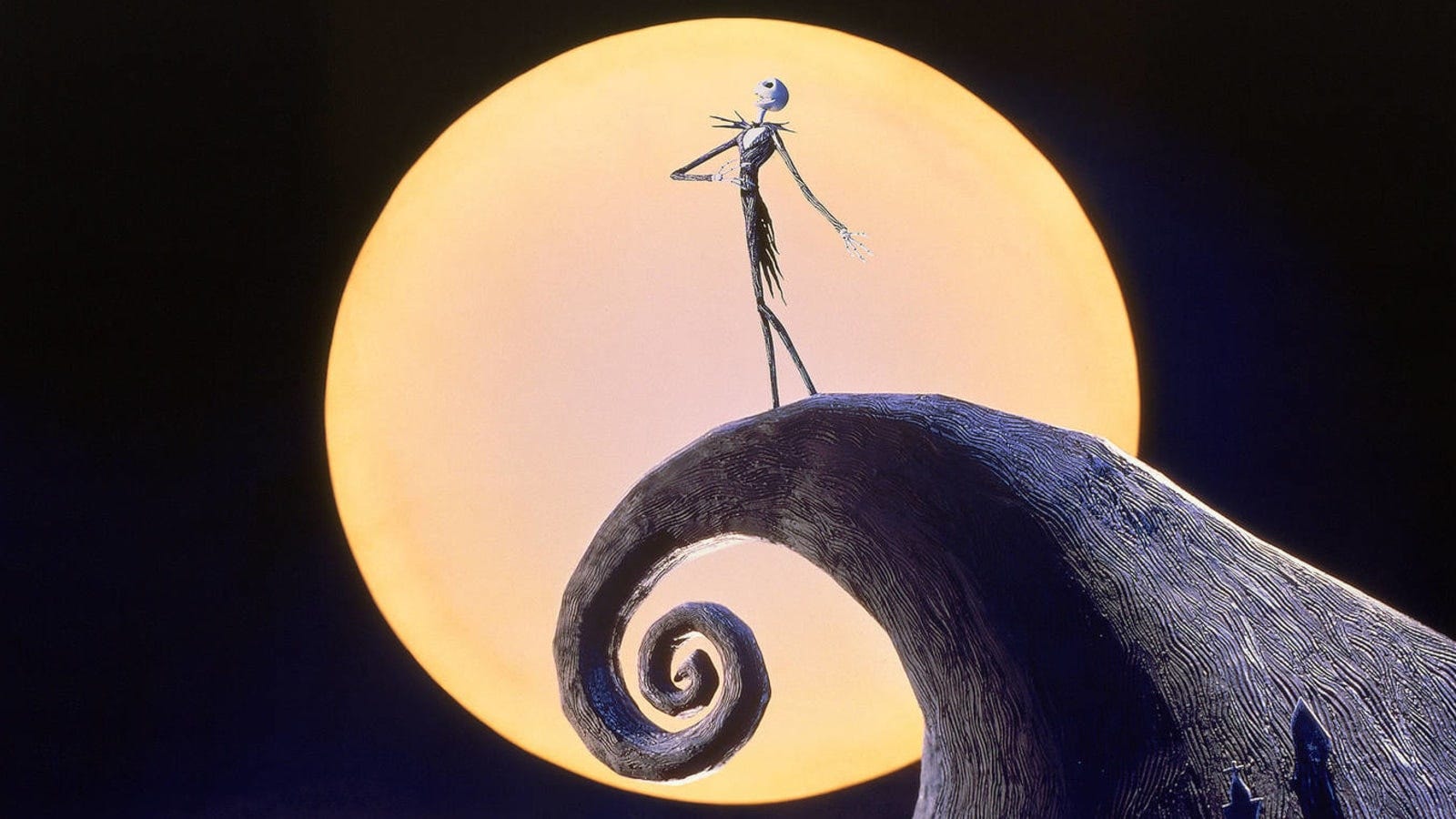
THE NIGHTMARE BEFORE CHRISTMAS
1993 • Henry SelickScreenplay: Caroline Thompson; Adaptation by Michael McDowell; Story by Tim Burton
Voice Cast: Danny Elfman, Chris Sarandon, Catherine O'Hara, William Hickey, Glenn Shadix, Paul Reubens, Ken Page
Cinematography: Pete Kozachik
Music: Danny Elfman
Producers: Tim Burton, Denise Di Novi
Disney
Just because I cannot see it, doesn't mean I can't believe it!
The film that has single-handedly kept Hot Topic in business for the last 20 years. The Nightmare Before Christmas is a dark fantasy children’s musical that follows the story of Jack Skellington, the Pumpkin King of Halloween Town. Tired of the same old routine in his spooky world, Jack stumbles upon Christmas Town and becomes enchanted by the idea of bringing Christmas cheer to his Halloween-loving community. He hatches a plan to take over Christmas, but his well-intentioned mission goes awry when his interpretation of the holiday clashes with the traditional festive spirit. Along the way, Jack discovers the importance of embracing one's own identity and appreciating the uniqueness of different holidays.
Every year, as the first leaves of autumn fall and the Spirit Halloween takes over that same spot in the strip mall, there's one movie that finds its way into my heart, remixing the boundaries of traditional holiday genres, and creating a cheerfully spooky mashup. The Nightmare Before Christmas is a film that seamlessly weaves the eerie charm of Halloween with the festive cheer of Christmas, making it not just one of my favorite Christmas movies, but also a staple for Halloween. Despite its initial marketing as a Disney kids' film, this creepy classic delves into the shadows, revealing a darkness that captivates both young and old audiences.
Tim Burton might not have been directly involved in the production, but his influence permeates every frame. Jack Skellington and other prominent characters came to life from his designs and he wrote a poem of the same name, about a skeleton and his love of Halloween. Burton leaves his unmistakable mark on the movie, even if he wasn’t in the studio capturing every shot of the beautiful stop motion. The result is a delightful concoction of the macabre and the magical, a visual feast that stirs the imagination.
The heart of the film lies in Halloween Town, a dream world populated by deformed monsters, ghosts, ghouls, goblins, vampires, werewolves, and witches. These creatures brought to life through marvelous animation, add a layer of depth to the story, making it a visual spectacle. The love for classic monsters is apparent in every ghastly grin, every lurching step, and every eerie cackle of the creatures that populate the film. Tim Burton's deep-seated affection for classic horror films and their iconic monsters is woven into the very fabric of Halloween Town, where the designs of the inhabitants pay homage to the creatures that have haunted our dreams and fueled our nightmares for generations. By infusing Halloween Town with these beloved creatures, the film becomes a love letter to the timeless appeal of classic monsters, reminding us of the enduring power of these iconic beings in shaping our collective nightmares and fueling our imagination.
The design of Halloween Town is a tribute to the aesthetic of German Expressionism. German Expressionism is renowned for its distorted and exaggerated visuals, often characterized by sharp angles, dramatic shadows, and surreal landscapes. In Halloween Town, these elements come to life in a way that is both captivating and haunting. The skewed buildings, twisted trees, and elongated shadows create a sense of otherworldly beauty, evoking a feeling of disquiet that perfectly mirrors the spirit of Halloween. The town's architecture, with its gnarled spires and crooked rooftops, mirrors the distorted perspectives often found in German Expressionist films like The Cabinet of Dr. Caligari or Nosferatu. The use of stark contrasts between light and shadow not only adds depth to the animation but also intensifies the eerie ambiance.
The film is a testament to the power of voice acting, with an ensemble cast that brings life to the film's iconic characters. At the heart of the cast is Chris Sarandon, whose velvety voice lends depth and complexity to Jack Skellington (while Danny Elfman’s voice belted out Jack’s songs), the Pumpkin King who experiences a crisis of identity. Sarandon's portrayal captures Jack's longing for something more, his voice resonating with both melancholy and determination. His ability to convey Jack's emotional journey adds layers to the character, making audiences empathize with the skeleton king's desire for self-discovery. Opposite Sarandon is Catherine O'Hara, whose vocal talents breathe life into Sally, the lovable ragdoll with a heart of gold. O'Hara's voice work is a delicate balance of innocence and wisdom, capturing Sally's resilience despite her delicate appearance. Additionally, the supporting cast, including William Hickey as Dr. Finkelstein, Ken Page as Oogie Boogie, and Paul Reubens as Lock, infuse their characters with unique personalities and quirks. Their vocal performances elevate the film's secondary characters, making them memorable and endearing in their own right.
Danny Elfman's songs, in particular, are unforgettable. From the spirited "This Is Halloween" to the delightful "What's This?" and the mischievous "Kidnap the Sandy Claws," every musical piece is a gem. And who can forget the wicked "Oogie Boogie’s Song?" These tunes have become anthems for fans, their catchy melodies and clever lyrics adding layers to the characters and the story. "This Is Halloween" introduces audiences to the ghoulish delights of Halloween Town, and captures the essence of the film's playful macabre. Its lyrics set the stage for the film's unique blend of darkness and whimsy:
Boys and girls of every age
Wouldn't you like to see something strange?
Come with us and you will see
This, our town of Halloween
"What's This?" is a delightful exploration of Jack Skellington's curiosity about the wonders of Christmas, comparing his fascination with the holiday to his experiences in Halloween Town. The song's sense of wonder and discovery is joyful, making it a standout moment that captures the film's central theme of embracing the unknown.
There's children throwing snowballs instead of throwing heads
They're busy building toys and absolutely no one's dead
There's frost on every window, oh, I can't believe my eyes
And in my bones I feel the warmth that's coming from inside
"Kidnap the Sandy Claws" showcases the mischievous Trick-or-Treaters of Lock, Stock and Barrell, and their sinister plans set to a lively tune. The song's playful lyrics and infectious energy add yet another layer of humor to the film.
Kidnap the Sandy Claws, throw him in a box
Bury him for ninety years, then see if he talks
And then there's "Oogie Boogie's Song," a black-hearted tune that accompanies one of the film's most memorable and sinister characters: The Oogie Boogie Man. The jazzy rhythm offsets Oogie Boogie's menacing lyrics, resulting in my favorite song in the film.
Oh brother, you're something
You put me in a spin
You aren't comprehending
The position that you're in
It's hopeless, you're finished
You haven't got prayer
'Cause I'm Mr. Oogie Boogie
And you ain't going nowhere
What makes these songs truly exceptional is their ability to enhance the characterization and storytelling. Each musical piece delves into the psyche of the characters, revealing their desires, fears, and motivations. Jack Skellington's longing for something more ("Jack's Lament"), Sally's yearning for freedom (“Sally’s Song”), and Oogie Boogie's nefarious schemes are all encapsulated within these melodies. Beyond their narrative significance, these songs have become anthems for fans, transcending the boundaries of the film. The catchy melodies and clever lyrics have inspired covers, remixes, and even entire theatrical productions, showcasing the enduring appeal of Elfman's musical creations. Covers of the songs have been recorded by bands like Marilyn Manson, Fiona Apple, The All-American Rejects, Korn and Amy Lee.
In an era where computer-generated animation reigns, The Nightmare Before Christmas stands as a remarkable testament to the enduring artistry of stop-motion animation. The meticulous attention to detail in every frame, the painstakingly crafted puppets, and the intricate sets showcase a level of artistry and dedication rarely seen in modern filmmaking. Selick's direction brought life to the characters in a way that felt tangible and authentic, capturing the subtle nuances of their expressions and movements, doing justice to the craft of stop-motion animation. The film's stop-motion animation represents a labor of love and an extraordinary feat of craftsmanship. Every character, from the iconic Jack Skellington to the smallest resident of Halloween Town, was meticulously sculpted, molded, and animated frame by frame. Each movement, gesture, and facial expression was carefully choreographed, resulting in characters that felt alive and real, despite being crafted from clay (molded in rubber) and fabric. Selick's direction elevated the art of stop-motion animation but also made it deeply human (skeleton.) The film's enduring appeal lies not just in its innovative animation techniques, but also in its ability to capture the essence of the holidays and the human experience. Selick's masterful direction makes it clear that stop-motion animation when executed with skill and passion, can create cinematic wonders. The Nightmare Before Christmas may just be the best stop-motion animated film of all time. (Sorry, Rudolph)
While initially a theatrical release, The Nightmare Before Christmas found its true home in the black hearts of goth viewers through home video sales. Its spooky narrative, coupled with its striking animation and banging music, turned it into a cult classic. It’s more mainstream now, but we liked it before it was cool, ok man? Each year, as the holiday season approaches, fans eagerly revisit Halloween Town and Christmas Town, reveling in the film's timeless appeal.
Kidnap the Sandy Claws, beat him with a stick, lock him up for ninety years, see what makes him tick.
Notoable Awards & Accomplishments
Academy Award Nominee: Best Visual Effects
Saturn Award Winner: Best Fantasy Film, Best Music
Golden Globe Nominee: Best Original Score
Streaming: Disney+
Digital Rental/Purchase: Available at most digital retailers
Physical Media: Available on 4K, Blu-Ray and DVD.


Friday, October 13, 2023
Saturday, October 7, 2023
The Essential Films Podcast Episode #60: Short Subjects: LICENCE TO KILL (1989)
When CIA operative Felix Leiter is left for dead by vicious drug kingpin, Sanchez, James Bond makes it his personal vendetta to take him down… going so far as becoming a rogue agent.
Links:
YouTube: https://www.youtube.com/@adolfojacosta/
Substack: https://adolfoacosta.substack.com
Tiktok: https://www.tiktok.com/@adolfojacosta
Facebook: https://www.facebook.com/TheEssential...
Podcast: https://open.spotify.com/show/5kOLC5r...
Linktree: https://linktr.ee/adolfoacosta
Website: https://essentialfilmspodcast.com